Posted in [writer resources]

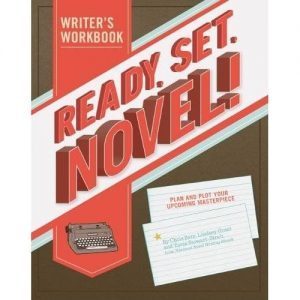
[Resource Review] “Ready, Set, Novel!” by Chris Baty, Lindsey Grant, and Tavia Stewart-Streit

Full Title: Ready, Set, Novel! Plan and Plot Your Upcoming Masterpiece
Author: Chris Baty, Lindsey Grant, and Tavia Stewart-Streit from National Novel Writing Month
Published: October 2011 by Chronicle Books
Genres: Nonfiction, Books & Writing, Writing Fiction, Authorship, Writing Skills
Edition Details: 160 pages, trade paperback
Source: {Purchased – New}
Rating: {4/5 stars}

First Glance

Woohoo! It’s a NaNoWriMo workbook! I love workbooks!

In all seriousness, this was the last NaNoWriMo-specific book on my list. I mostly bought it to complete the NaNoWriMo mini collection.

Positive Bits

The NaNoWriMo team really did create a workbook for writers that fits the formatting of the event itself. These are the hands-on activities I said were missing in the previous books; in fact, I’m surprised they didn’t make a combination set somewhere along the way.

I love the playful attitude of this workbook. There’s a page that’s literally a high five, and you’re supposed to celebrate your successes by slapping the hand on the page. There’s also a boot for your “kick in the pants” as needed. Silly, but cute!

For a newbie writer with little or no experience with creating characters from scratch, I think the activities focused on that process are particularly helpful. When I was younger, I basically kidnapped the personality of people close to me (while changing their names). The workbook gives you more thorough activities for character building.

Less Enjoyable Bits

I’m not sure this book is useful if you’ve written multiple stories in the past. Many of the activities are super simplified processes that you internalize as you grow, and that makes this workbook feel less helpful than I’d hoped it to be.

Workbooks, by their very nature, have little actual writing in them. There’s tons of blank space for the person actually doing the work. That said, I sprinted through this book and found myself disappointed at how short it was outside of the times you were supposed to pause your reading and do an exercise.

It’s a silly complaint, but I prefer workbooks that are bound in a way that allows easier use. The spine on this book (while new) is very stiff, so actually writing in the workbook itself would be irritating until you broke it in. There’s not much to do about that, though, unless the publisher wanted to use the thinner paper and binding of a traditional school workbook instead of trade paperback binding methods.

Tidbits Worth Repeating*

*Note: I didn’t have a lot of quote to share, because this workbook is mostly a collection of exercises that don’t lend themselves to epic quotability.

The hardest part is behind you. Your story is here. Your characters are waiting. It’s time for the next phase of this bookish adventure to begin. You ready? You’re set. Let’s novel. {page 117}

Is it worth the coin?

Yes – particularly for new writers. If you benefit from surfing Tumblr or Pinterest for character creation tips and the like, then this book has a decent collection of worksheets to help you out. This workbook would also be a great help with pre-planning your novel, doing the outlining and world building required to get started.
Posted in [writer resources]

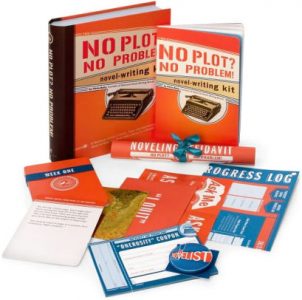
[Resource Review] “No Plot? No Problem! Novel-Writing Kit” by Chris Baty

Full Title: No Plot? No Problem! Novel-Writing Kit: A Treasure Chest of Tools, Tips, and Righteous Gear to Help You Bash Out a Novel in a Month
Author: Chris Baty, Founder of National Novel Writing Month
Published: September 2006 by Chronicle Books
Genres: Nonfiction, Writing & Books, Authorship, Writing Skills, Writing Fiction
Edition Details: 48 pages, trade paperback – kit also includes a calendar, daily inspiration cards, coupons and peptalk letters, and the Radiant Badge of the Triumphant Wordsmith
Source: {Purchased – New}
Rating: {5/5 stars}

First Glance

I know I reviewed the original NaNoWriMo book, but I happened to get this kit on clearance at Barnes & Noble somewhere along the way as well. I’ll be brief, as there are few thoughts about this kit that don’t align with my review of the 2004 book.

Positive Bits

Humor is still Baty’s key approach, and it fit well with the pacing of this smaller kit’s book. The activities mentioned as similar to those in the core book, but this kit focuses on the basic details and leaves the actual accomplishment of each activity up to the writer.

I enjoyed the titles and descriptions of people who you might invite to join you. Instead of just suggesting family and friends, Baty takes the time to explain archetypes for each kind of person. A fellow writer. A challenge taker. A book group(ie).

Less Enjoyable Bits

Honestly, there’s a clear echo. The mini book in this kit would easily take the place of purchasing the full No Plot? No Problem! if you were choosing between A or B. You’re losing the history of NaNoWriMo and some depth to the exercises offered, but the basic explanation and guidance for writing a novel in a month are still present.

However, this kit really is the bare bones of NaNoWriMo guidance. It’s good… but not very different from just reading bits and pieces of the peptalk emails you get from NaNoWriMo’s website during November.

Tidbits Worth Repeating

The Radiant Badge of the Triumphant Wordsmith {throughout}

I just really love the over-the-top name! Maybe I should add that to my resume…

Is it worth the coin?

Yes – I think the kit has been on the clearance shelves of Barnes & Noble for the past year or so. But even at full price, this kit is just playful enough to get you going on your NaNoWriMo adventure. Also, there’s just something extra enjoyable about using a kit rather than just referencing a book.

Posted in [writer resources]

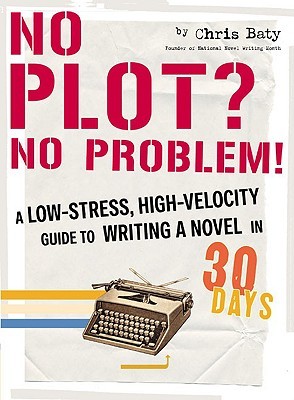
[Resource Review] “No Plot? No Problem!” by Chris Baty

Full Title: No Plot? No Problem! A Low-Stress, High-Velocity Guide to Writing a Novel in 30 Days
Author: Chris Baty, Founder of National Novel Writing Month
Published: September 2004 by Chronicle Books (apparently I got a used first edition)
Genres: Nonfiction, Writing &  Books, Authorship, Writing Skills, Writing Fiction
Edition Details: 176 pages, trade paperback
Source: {Purchased – Used}
Rating: {4.5/5 stars}

First Glance

Let’s be real. As someone who’s participated in NaNoWriMo for years, I was destined to enjoy this book. My only first glance impression was that my edition might be quite different from whatever’s being sold now (14 years later). Actually, my wife’s joked about buying me the newest 2014 expanded edition just so I can compare the two!

Positive Bits

Humor is often hit and miss. Baty found a good balance, I think, in using generalized jokes and dorky humor throughout the book, all without crossing the line into anything questionable (i.e. sexist, racist, ageist, etc.).

One activity I loved the idea of is the Magna Carta (and Magna Carta II). The short version is that you make a list of things you love in a story (I) and things you can’t stand (II). Those lists then serve as a guide when you feel a bit listless or lost in your plot. I’ve done this activity before (calling it “reader research”), and I think it’s a marvelous way to really discover both preferences and skills.

The language of this book (and concepts presented) never aim over the head of anyone who can read a chapter book. I think a middle schooler could get just as much use and enjoyment out of this book as their grandparent. Baty’s voice is conversational enough to make reading each chapter feel like a chat over coffee (or cocoa).

Less Enjoyable Bits

Every single time Baty directs the reader to take full advantage of company supplies or time, I cringe. Maybe that worked a decade ago, but many companies now record all emails sent and received (for legal reasons). Personal documents aren’t actually personal. So aside from the questionable ethics of not working at work, you have the reality that today’s companies will be far less naive about your digital activities (and printing). That said, a wireless keyboard and a smartphone can lend more honest opportunities to write on breaks and lunch (while avoiding company resources and time).

This book doesn’t include a lot of suggestions on your process itself. It covers the basics of your word count, your timeline, and then a weekly breakdown of how (he assumes) you’ll feel as the event goes forward. Small stories and side notes from previous NaNoWriMo participants help mediate this absence, but it still left me a little disappointed.

Baty wrote for non-writers. His pep talks and advice are ideal for them… and less useful for the rest of us. I think writers need a different approach, largely because we have a familiarity with the process that also makes us more nervous about success versus failure.

Tidbits Worth Repeating

The biggest thing separating people from their artistic ambitions is not a lack of talent. It’s the lack of a deadlineGive someone an enormous task, a supportive community, and a friendly-yet-firm due date, and miracles will happen. {page 14}

The things that you appreciate as a reader are also the things you’ll likely excel at as a writer. {page 86}

[Talking about people playing sports or videos games for fun on weekends, not to become famous] They do it because the challenge of the game simply feels good.  They do it because they like to compete, because they like spending time with friends, because it feels really, really nice to just lose themselves in the visceral pleasure of an activity. Novel-writing is just a recreational sport where you don’t have to get up out of your chair. {page 172}

Is it worth the coin?

Yes – I’d even buy this book at full price, and I rarely do that with any book. While I didn’t get as much active assistance from this book as I’d hoped, the history of NaNoWriMo and its bare bones fascinated me.