Posted in [fiction reviews]

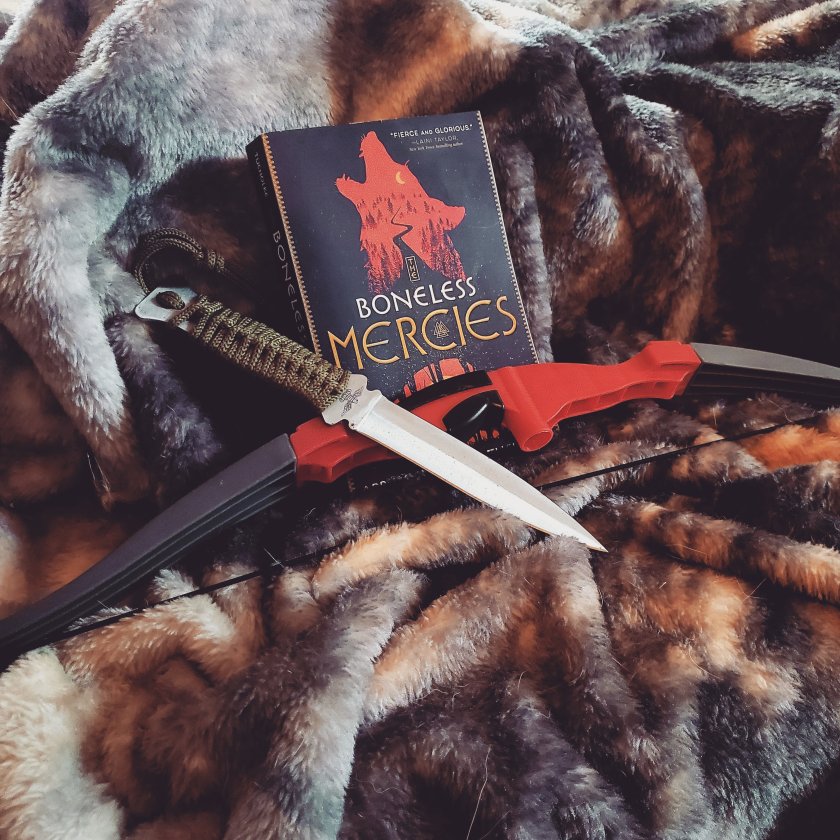
[Fiction Review] “The Boneless Mercies” by April Genevieve Tucholke

Full Title: The Boneless Mercies
Author: April Genevieve Tucholke
Published: October 2018 by Farrar, Straus and Giroux
Genres: Fiction, YA Fantasy, Dark Fantasy, High Fantasy, Mythology Retold
Edition Details: 352 pages, trade paperback
Source: Purchased
Rating: {4/5 stars}

This review is spoiler free. No details will be shared from the storyline itself that aren’t available or inferred from the book jacket and online descriptions.

First Glance

This book has been on my TBR list for ages, but I kept putting it back in an effort to avoid buying too many new books when my pile of unread books is already unmanageable. And yet, when our local book club asked for suggestions on books to read, I immediately thought of this one. It gave me an excuse to finally buy it!

Positive Bits

This world is harsh but beautiful. The fact that the Mercies and their trade are needed, that people would pay to die at their hands, tells you something about the kind of reality they live in. And yet, each death we witness has its beauty. Even the deaths of “bad” people are done in such a way as to be a mercy killing, so that we walk away with the feeling that death is both a kindness and an inevitability.

I adored the variety of girls involved in the Mercies, particularly when their origins come out during the course of the story. Letting each girl be so different while remaining so close spoke to me, and they felt real compared to a gaggle of photocopy children running wild together. Each girl played an important role toward the finale of the story, all feeding into the plot with their actions. Juniper is my favorite from start to finish, particularly as her story is told.

The end left me both satisfied and a little sad. Without ruining it, I can only say that I had hoped each girl would get to make different choices for their futures after leaving behind the Mercies. More than once, though, we see them at a fork in the road without an obvious path to choose; as we follow them down their choice, we can see all of the potential futures they left behind. The fact that each choice feels like a reasonable one is what makes this book so good!

Less Enjoyable Bits

This book never mentioned that it’s a retelling of Norse mythology or a clever twist on Beowulf. The blurbs mention it, but I honestly skip blurbs on covers out of irritation; I prefer a proper book description rather than snippets of someone’s opinion. Honestly, the mythological tie-ins are a bonus rather than a notch against this book, but they should’ve been part of the marketing.

While it doesn’t bother me, the book does run light on the descriptive imagery. We get an introduction to each person and location with vaguely sketched lines, and then we move on with the plot. For some, that means more space for our imaginations to run amok. But for others, this might be an issue.

There’s a romantic subplot that’s woven throughout the book, only to have no real payout. Again, I don’t want to spoil anything, but it was a letdown. If it had been treated as a small detail, the lack of follow through would’ve been just fine. When it’s brought up often enough to feel very important, you kind of need to make something out of it by the ending. Added to that, there’s an almost sapphic energy between the Mercies that’s never explained or explored – another disappointment and, at least in my opinion, a missed opportunity.

Tidbits Worth Repeating

Glory. I wanted to touch it. Taste it. I wanted it so deeply I thought my heart would swell up, claw its way out of me, and float away on the wind, cawing like a Sea Witch raven, a prayer caught in its beak.

I’d experienced joy before. Not often, but enough to know what it was, enough to ache for it late at night when I sat quietly beside the fire. Joy was different from peace, though. Peace was slower, calmer, and lasted longer. I hadn’t know this kind of tranquility could exist.

We didn’t speak. There was no need. I felt her heart against mine, and it sang the same sad song.

Is it worth the coin?

Yes – I will always recommend a good retelling of mythology or folktales! This weaving of magic and Norse-flavored myth is perfect for someone with little familiarity of the base materials.
Posted in [fiction reviews]

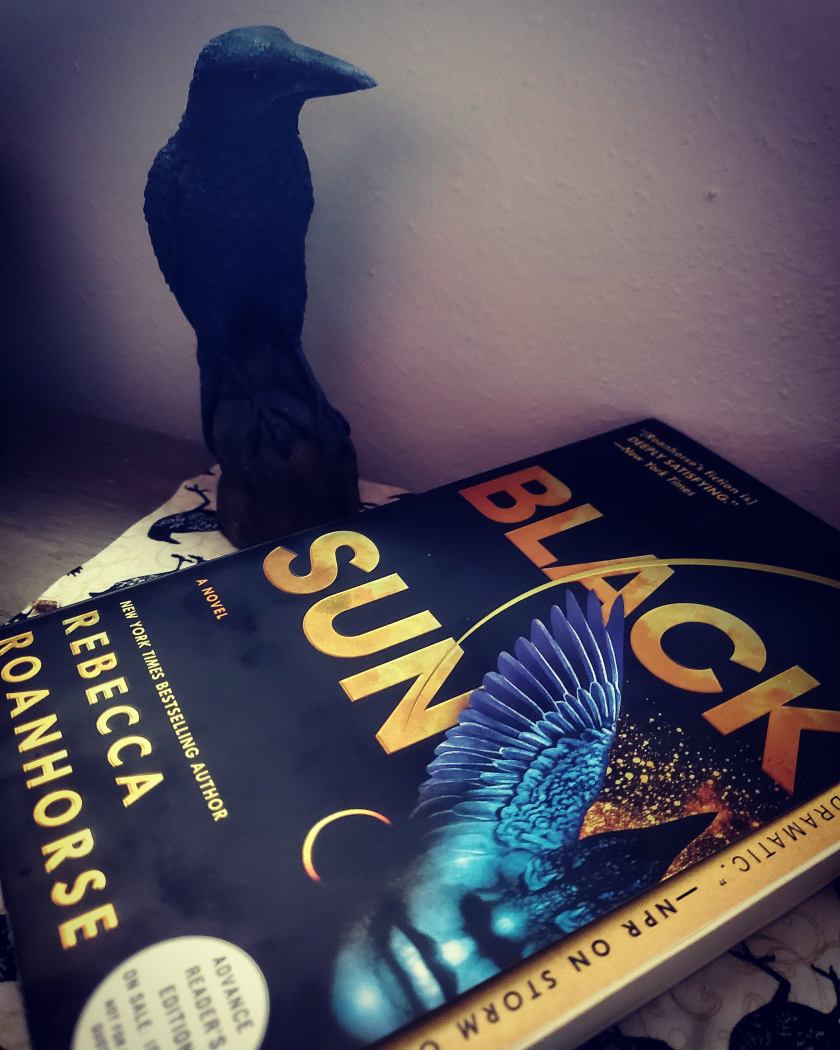
[Fiction Review] “Black Sun” by Rebecca Roanhorse

Full Title: Black Sun (Between Earth and Sky #1)
Author: Rebecca Roanhorse
Published: October 2020 by Gallery / Saga Press
Genres: Fiction, Epic Fantasy, Historical Fantasy, Native American Literature, LGBTQ Fantasy
Edition Details: 464 pages, trade paperback
Source: Advanced Reader’s Edition won via Goodreads Giveaway
Rating: {5/5 stars}

This review is spoiler free. No details will be shared from the storyline itself that aren’t available or inferred from the book jacket and online descriptions.

First Glance

I enter giveaways on Goodreads if the book sounds like something I might read. In the case of this book, the description had me entering to win in the first sentence:

From the New York Times bestselling author of Star Wars: Resistance Reborn comes the first book in the Between Earth and Sky trilogy, inspired by the civilizations of the Pre-Columbian Americas and woven into a tale of celestial prophecies, political intrigue, and forbidden magic.

I’m a sucker for any story based in mythology, but I particularly enjoy magical worlds reimagining unfamiliar cultures. In her acknowledgements and credits at the end of the book, the author points out how often “epic fantasy” only seems to apply to European-flavored stories. I agree, which is why I often seek out those written in different lands.

Positive Bits

The world we’re brought into is beautiful and deadly. Isn’t that the best kind? We visit a land with a holy city run by Priests of the non-Christian variety, as well as wild seas and a crescent coast full of different peoples and cultures. Even without visiting some of the locations mentioned by characters, we’re given enough details to have a taste of their individual quirks. The worldbuilding was done skillfully enough that I never had a moment where I fell out of the story due to confusion over a custom or description.

As a queer woman, I greatly appreciated the fact that LGBTQ folks exist throughout the story without being the story. Representation is important, and I love a good queer-focused story as much as the next person, but the best kinds of representation are when being queer is treated the same as being short or tall – as in, it’s natural and a part of some characters’ stories without being the entirety of their plotline. Also, there’s a nonbinary person throughout this first book who uses the pronouns xe/xir, and I found that inclusion to be done skillfully enough to explain and then move us along to the actual reason xe was introduced.

Trilogies by their very nature have to end unfinished, but there’s a skill needed to leave us wanting more without leaving us at a confusing cliffhanger. This book handles that balance well, leaving us with just enough closure to be satisfied while maintaining enough loose threads to keep weaving the story in the next book. The specific characters who end up together at the end due to circumstance definitely had me wishing for more.

Less Enjoyable Bits

Sometimes, I find details I dislike that are important to the story. I think that might be the case here. For example, one character struggles with alcoholism or at least regularly uses alcohol to seek oblivion, and there’s a decent portion of the story where it’s not given context. It’s just a vice they have, and it gets them tossed in jail (to have them meet up with other important characters, of course). Much later, we learn a few details about their past that hint at why they drink so often, but it’s not particularly satisfying. Then again, maybe any family or personal experience with alcoholism or alcoholics makes this plotline hit different?

We’re given hints of each main character’s past, but sometimes it’s not balanced in the first book of a trilogy like this. While I became thoroughly invested in each of the characters as they came across the page, it disappointed me that we didn’t get more information on the Teek. Considering how their people and culture play into the first book’s story, I would’ve expected to hear more about them than a passing mention. The story in book one still makes sense without those details, but it might’ve been enriched with more of them included.

My only other complaint is on the magic system(s) used in this world. I enjoy fantasy worlds where magic is standard, especially if there are different kinds based on culture or class. That said, this book didn’t flesh out the magic existing in their society. We get hints here and there for plot purposes, but there’s never a really good explanation of what is and isn’t possible with magic (or how). Again, this might be a trilogy issue rather than an issue with this book directly. I can only wait and see in book two.

Tidbits Worth Repeating

She was only ten, then, her destiny far from decided. She had not yet learned that she was poor and that people like her only went to the celestial tower as servants, or that once you were poor, people hated you for it even when you weren’t poor anymore.

“Villain,” he mouthed, liking the sound of it, the weight of the word on his bloodied lip. If protecting his crows made him a villain, then a villain he would be.

Even when armed with blade and bow, even with an army of a thousand at her command, a spearmaiden’s greatest weapon is her tongue.

Is it worth the coin?

Yes – if you enjoy reading fantasy based in non-European cultures, this book is a great add to your collection. Also, the queer representation is woven throughout the story, so that’s a major bonus!

Posted in [witchy reviews]

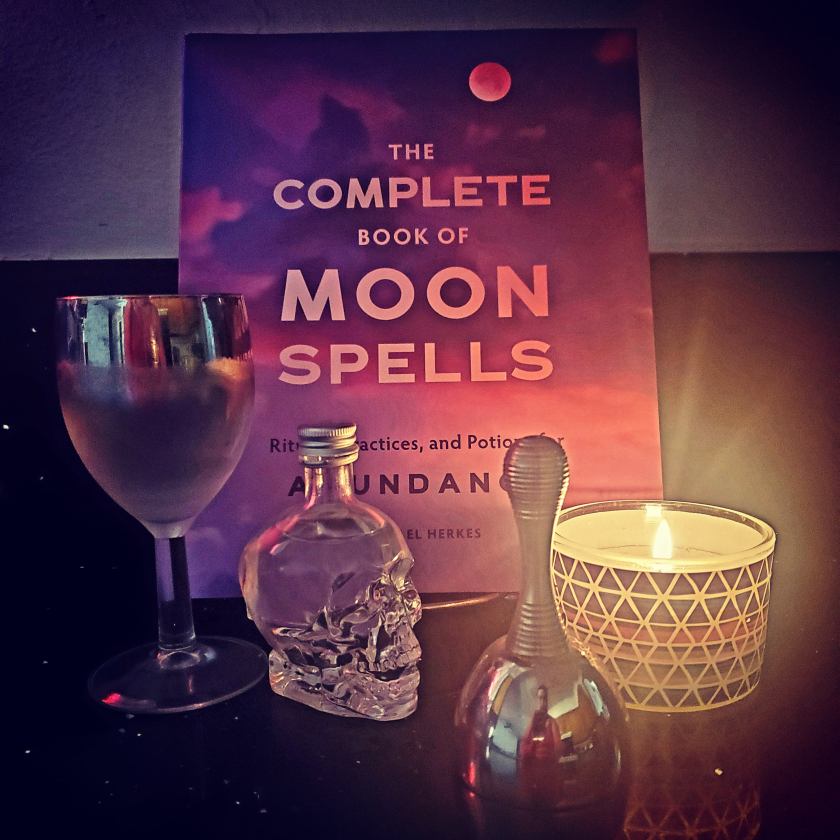
[Witchy Review] “The Complete Book of Moon Spells” by Michael Herkes

Full Title: The Complete Book of Moon Spells: Rituals, Practices, and Potions for Abundance
Author: Michael Herkes
Published: July 2020 by Rockridge Press
Genres: Nonfiction, Magic Studies, Witchcraft, Spirituality, Moon Magic, Goddess Worship
Edition Details: 218 pages, trade paperback
Source: Won via Instagram Giveaway
Rating: {4.5/5 stars}

First Glance

I won this book from an Instagram giveaway hosted by @fatfeministwitch (Paige Vanderbeck) and @the.glam.witch (Michael Herkes) in July. They asked for affirmations based on a moon phase prompt, and mine was “I am a child of the universe, my bones and blood are stardust!” I’ll admit that I hadn’t run across Michael’s Instagram prior to the giveaway, but his posts are always colorful and inspirational.

Positive Bits

Right off the bat, I was impressed and excited by the book’s plan to break down the lunar cycle into eight different phases instead of the standard four. Even moon-focused books often direct your energies to the New and Full Moons, with basic details on the differences between waning and waxing moon energies. Here, we get spells and rituals designed for all phases of the moon, taking us deeper into the practice of lunar magic.

Each section starts with a journaling prompt, helping you to form your magical intentions before you start working your magic. I think this provides real guidance for working through your magical goals with focus, rather than a complete set-it-and-forget-it approach. Also, your journaled notes will be there later for reference, so you can look back and see what works for you personally. As someone who struggles to journal regularly, I think these prompts are pure gold! They give just enough of a push to guide me into writing down my thoughts throughout the lunar cycle.

The layout of this book is perfect for active use! Each ritual and spell only covers two pages, facing each out. That means you could prop it open on your altar and work from the pages without having to flip back and forth for details. It prevents you from feeling overwhelmed by an ungainly mess of ritual instructions, which is often a problem with pre-made rituals. All in all, the aesthetics and functionality of this book put it high on my resource list. Rockridge Press once again used colors and formatting choices to enhance the book’s message, and I’m starting to think they’re a publisher to keep an eye on.

Less Enjoyable Bits

I get a little disappointed when anyone shortcuts their ritual closing process. The ritual outline for starting your magic is nicely detailed, from casting circle to calling quarters to raising energy. But when we’re all done, the closing of the circle turns into a quick description of giving thanks. I feel like you need to either be general in your instructions for both calling and releasing the elements, or you need to include full descriptions for each piece of their participation. It’s a pet peeve I notice in a lot of pre-made ritual descriptions including the processes used by my old coven, so it’s not a deal breaker. It’s just frustrating.

There are a few times that random ceremonial or hoodoo magic practices are pulled in without explanation, but this is the nature of being a witch outside of a standardized path. I’d likely research symbols and actions with more detail if they weren’t familiar to my personal practices, so this didn’t make any spells or rituals stand out as malformed. Instead, I reread the spells that had these kinds of details and looked for the why.

Every witch is different, and so are our ethics. That said, I took issue with one particular spell in this book. In a spell for strengthening an existing relationship, we’re told that hair is the easiest biological bit to retrieve from your partner without being noticed. However, if you’re in a healthy relationship that you simply wish to enhance, I would think you could safely ask for permission to use their hair instead of sneaking around. Call me old fashioned, but that doesn’t sound like a relationship with open and honest communication. I recognize, though, that this is my personal ethical approach to magic that directly includes another person.

Tidbits Worth Repeating

The universe does not operate on our sense of time. Spellcasting is not a fast-food spiritual practice. – page 19

Not everything goes the way you think it will. Sometimes life takes a sharp turn off course, and you either back up and get back on the road or change course completely. Regardless of which way you go, I’ve learned it’s best to just enjoy the scenery of whatever detour you take. – page 88

All obstacles present new experiences for us to learn and grow from. It is through embracing these hardships that we learn just how strong we are. – page 144

Is it worth the coin?

Yes – this book would be a good resource for someone just starting their lunar practice, because it strikes a balance between simplicity and focus. For those not new to their path, the spells can provide a shot of inspiration to revive and rejuvenate your moon magic.

Posted in [witchy reviews]

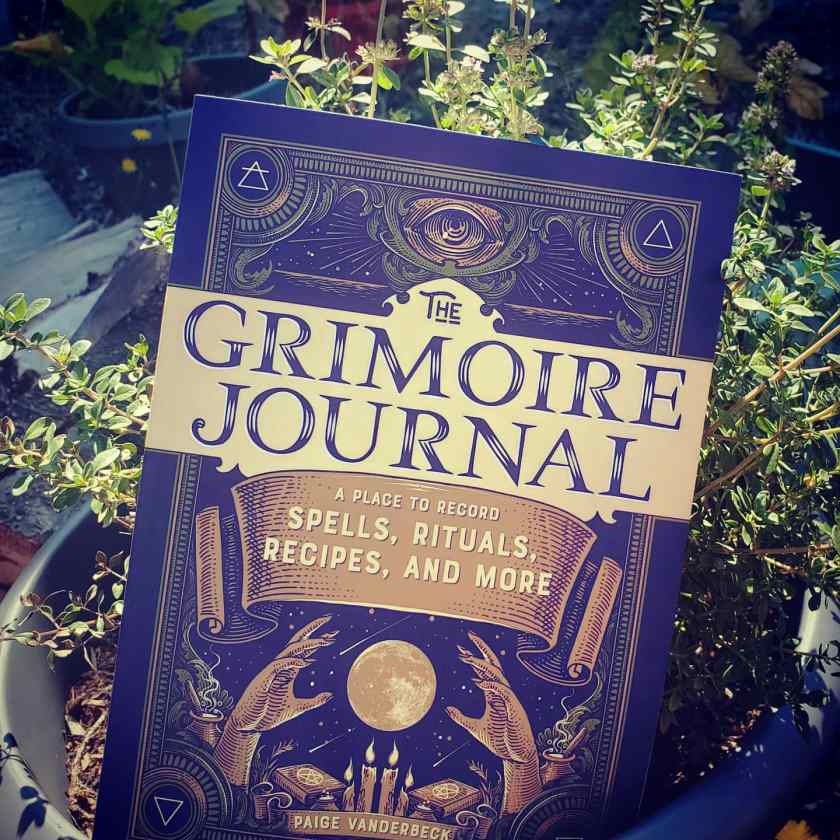
[Witchy Review] “The Grimoire Journal” by Paige Vanderbeck

Full Title: The Grimoire Journal: A Place to Record Spells, Rituals, Recipes, and More
Author: Paige Vanderbeck
Published: July 2020 by Rockridge Press
Genres: Nonfiction, Wicca, Magic Studies, Witchcraft, Spirituality, Journal
Edition Details: 158 pages, trade paperback
Source: Won via Instagram Giveaway
Rating: {5/5 stars}

First Glance

I won this book from an Instagram giveaway hosted by @fatfeministwitch (Paige Vanderbeck) and @the.glam.witch (Michael Herkes) in July. They asked for affirmations based on one of the prompts in this book, and mine was “I am a child of the universe, my bones and blood are stardust!”

Positive Bits

I need other publishers to step up their game! The aesthetics of this journal and the other books I’ve received from them are literally magical. We get colors and artwork scattered throughout the book, lending inspiration to the reader on every page. Journals and prompt books can come across as plain or even dull, especially when the majority of a page is full of straight lines for us to write. In this journal, we get the expected lines to fill in with our thoughts, but every single page has borders with color and symbols to tickle your fancy. The overall effect of this layout is a feeling of focused creativity.

Of course, the content itself is more important that the appearance. For my first read-through, I chose not to actually perform any of the writing activities or rituals while reviewing the full picture. Yet I found myself brainstorming page after page, staring off into space while I considered the prompt or spell worksheet at hand. As someone who’s been struggling with a witchy listlessness for some time now, it amazed me to feel so focused on each idea the journal presented. Not every spell suggestion fit my needs, but enough of them did to make the collection useful to any witch who might be looking for some inspiration.

There’s also a beauty in using a journal with prompts like this completely out of order. The topics are divided into basic sections: Summon Your Spells, Record Your Rituals, Relish Your Recipes, and Make Your Magic. What this really means is that there are prompts for spells, a review of large rituals celebrating the year, some recipes to craft around the kitchen, and a combination of various magical tools. You can work to create your own magical oil recipe, then turn around and use that for a prompted spell for protection. I’d actually recommend jotting down the page numbers of incorporated items like the oil recipe on any other pages it appears in, just to make finding your recipe easily when the time comes. All in all, the ties between items are loose enough that there’s no need to move chronologically through the exercises in order to gain their benefits.

Less Enjoyable Bits

This journal may not do much for a brand new witch. Without some basic background knowledge of various topics (elements, herbs, colors, crystals, and so forth), the prompts may come across as a bit overwhelming. However, some patience and the use of a couple outside resources could overcome this issue.

In a completely personal preference, I wish this journal was bound in a spiral. As a lefty in particular, I don’t enjoy the feeling of resistance that the left side of the book applies to your hand as you write in a bound book. That’s why my own active grimoire is a spiral journal instead, because it can truly lay flat. To be fair, though, I’m not sure that many publishers have the equipment (or desire) to bind books in anything other than traditional methods.

More prompts related to personal associations would’ve been wonderful. We get into some basics throughout the journal, but we didn’t dive into the elements or moon phases as they relate to us as individuals. Considering how different my relationship with the elements has been based on location (living in Texas versus living in the Pacific Northwest), that would’ve been an interesting direction to explore together.

Tidbits Worth Repeating

Magic isn’t something purely outside of ourselves; it’s equally pulled from within. We find it in our memories, feelings, and relationships, and our inner voice weaves this magic into the fabric of who we are and how we see ourselves. – page xi

The act of preparing food, for others or yourself, is inherently imbued with the energies of love, care, and healing. – page 70

The flame of your candle can release your wishes out into the universe, attract blessings and spirits with its warm light, and bring psychic revelations through smoke and wax. – page 102

Is it worth the coin?

Yes – particularly if you need some inspiration to get your magical creativity flowing. The variety of topics touched by this journal is like the rainbow of light a prism casts onto the walls as the sun hits – there’s a bit of every color mixed in!

Posted in [witchy reviews]

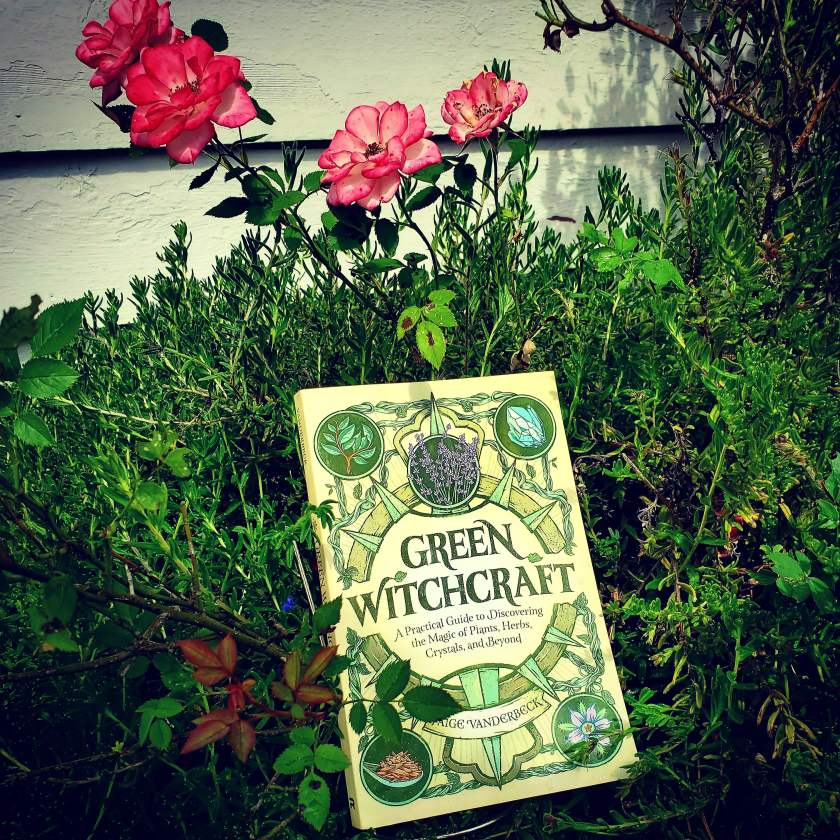
[Witchy Review] “Green Witchcraft” by Paige Vanderbeck

Full Title: Green Witchcraft: A Practical Guide to Discovering the Magic of Plants, Herbs, Crystals, and Beyond
Author: Paige Vanderbeck
Published: February 2020 by Rockridge Press
Genres: Nonfiction, Wicca, Witchcraft, Spirituality, Religion
Edition Details: 169 pages, trade paperback
Source: Purchased
Rating: {5/5 stars}

First Glance

Paige Vanderbeck is The Fat Feminist Witch, and she posts across various social media on witchcraft and related topics. She’s best known for her podcast, which is available on most podcast providers.

To be fair, though, I don’t do podcasts. I don’t have the focus to listen to someone speak without a visual, so I’ve only listened to one or two of her live shows thanks to Facebook Live. Still, between those and her non-podcast posts, it was exciting to see her publishing a book on green witchcraft. Added to that, I’m working to find new books for my personal library that aren’t a few decades old, so this definitely looked like a good option.

Positive Bits

Right off the bat, I think this book was written with the right amount of openness. What I mean is that we’re provided with just enough information and structure to function, but then we’re told to look into each topic ourselves and experience it directly. Too many books fall into the trap of telling you how energy feels or how magic works without giving any flexibility. In this book, we’re given a look at how each of our senses can interact with energies; as someone who can visualize the taste and smell of a peach but can’t visualize the image itself, I appreciated the discussion of different psychic senses being involved in your magical processes.

The fact that this book limits each category (stones, plants, etc) to fifteen examples is the perfect balance between being informational and being intuitive. By giving us a handful of examples and their basic magical information, we’re shown what potential different plants and stones have without being spoon fed associations to use. I think we could all use more intuition on our magic! Paige specifically tells us to consider the local flora for our magical workings, which is something I’ve been inspired to do now that I own a house. Having lived in half a dozen climates around the world while growing up, I can see the obvious benefit of looking at your specific location for plants, stones, trees, and other creatures to work into your magic.

Each spell and mixture of ingredients is satisfying as well as powerful. I love the simplicity of things like magical bath salts, because it’s important to bring your magic into your mundane moments like bath time. There’s also a note on several of the spells that explain optional additions to the working; this allows the caster to remain as simple or complex in their magic as they so desire. All in all, nothing felt inaccessible due to cost or content.

Less Enjoyable Bits

If you’re looking for a deep dive into the details of green witchcraft or a huge compendium of magical stones and plants, you’re going to be disappointed. This book is an introduction into green witchcraft and ways to incorporate it into your life, not an intensive guide into the dark corners of earth-based magic. Keep that in mind.

It would’ve been nice to see more information on how to find or discover the magical uses for different plants and stones. Sure, you can go buy a random collection, but I think there’s more power in figuring out magical associations yourself. The book tiptoes next to this idea, but we’re presented with things like elemental and astrological associations for items without any reference as to where or how to find those details. It was a missed opportunity to look a little closer at the intuitive side of green witchcraft.

I’ll be honest. I’m wracking my brain to find things I didn’t like about this book, and I can’t really think of any good reasons. I mean, I wish it was longer?

Tidbits Worth Repeating

The most important plants, herbs, and flowers for you to learn about are the ones that grow locally. What kinds of trees grow where you live? What are the native flower species? Are there poisonous plants and fungi onto which you might stumble? Their energy is all around you, and you have the privilege to be able to interact with them at all stages of growth, learning exactly how they work. – page 27

Your morning coffee is already a magical potion that energizes you and brings mental clarity. – page 79

As you go forward, creating your own path as you go, remember to remain curious and humble in the wilderness. – page 160

Is it worth the coin?

Yes – With two decades of witching under my belt, I can get a little annoyed at the repetition found in beginner’s books. Not this time! This book is perfect for a beginner, but it’s also inspired me to take a renewed look at my own path.

Posted in [fiction reviews]

[Fiction Review] “Practical Magic” by Alice Hoffman

Full Title: Practical Magic
Author: Alice Hoffman
Published: Reissue edition from 2003 by Berkley
Genres: Fiction, Family Saga, Magical Realism, Paranormal, Fantasy
Edition Details: 286 pages, trade paperback
Source: Purchased
Rating: {4/5 stars}

First Glance

I’m not a movie person. Period.

That said, Practical Magic is one of the few movies I still call a favorite, even as the years progress and the filming style (i.e. special effects, acting methods, directing, etc.) become more and more aged. I had no idea back in 1998 that the movie was based on a book; I was an eleven year old in a world without internet in everyone’s house, so I enjoyed the movie and moved on.

I only found out about the book when the prequel showed up on our bookstore’s display during my birthday trip. I picked up both books and added them to my TBR list, and a friend’s decision to create an online book club led to me bumping Practical Magic up to read next.

Positive Bits

This review contains spoilers, because this book and movie have been out for years. Fair warning!

Hoffman’s voice is unique in the way she tells her story. Instead of reading a story as though we are the omnipotent viewer, we get to experience the story as though we’re listening to a storyteller as they tell us the story. There’s not a ton of dialogue, but we get a taste of each character’s inner world through the descriptions of what they’re doing and feeling. It’s an interesting approach to telling a story that you don’t see often.

Kylie (Sally’s younger daughter of thirteen) is probably the most interesting character in the book. I enjoyed experiencing her sudden onset of aura and energy awareness, as some of the descriptions really hammer home the way someone with high empathy can feel. She felt like the character who was given the most depth, which is amusing when you consider that her main role in the movies was to be the little girl that saw Jimmy’s ghost. I think the story benefited overall from having teenagers instead of children in the family, as teenagers can provide another pair of nearly-adult eyes to view the story.

If I completely ignore the fact that a movie of this book exists and measure the book on its own standing, then I enjoyed the story. The magical realism involved is extremely subtle (i.e. almost non-existent), but I think it lends just enough suspension of disbelief to make the rest of the story believable. Without the hints of magic, the events that happen and the characters’ reactions to them wouldn’t make any sense.

Less Enjoyable Bits

My wife had to keep correcting me as I talked about this book. In my head, the movie has existed since I was a kid but the book only came into existence (for me) this year. Every difference I noticed came out as “they took out the part where…” instead of “the movie added a part where…”. Regardless, my problems with this book were largely based on what never happened outside of the movie. Some of my favorite scenes included the love spell meant to keep love away and the PTA phone tree calling in a volunteer coven to help save the day… neither of which existed in the book. Basically, the book had none of the movie’s magic woven into the story, and that was disappointing to a fan of the movie’s version of events.

Aside from artistic differences between the book and movie, I took issue with some of the random vulgarity in the descriptions. Hoffman’s prose is generally soft and floaty, like you’re listening to a storyteller, but she randomly tosses in details like “Maybe it’s because she’s just realized who it was she was fucking and calling sweetheart all that time. (page 223)” that become jarring as they enter the scene. There were a handful of times where the that kind of sharp note showed up unannounced, and I don’t feel like they were necessary to tell the story. Sometimes these moments also occurred within tangents in the prose, leaving them to feel both uncomfortable and unnecessary.

This book is labeled as magical realism, but it’s disappointingly mundane. Sure, the aunts are witch-like women who occasionally perform a love spell for someone foolish, but mostly they make soap to sustain themselves. They ride a bus to go down and help the girls out. One of Sally’s daughters can see auras when she turns thirteen, but it’s not important except to explain her seeing Jimmy’s spirit around the garden where he’s buried. She sees a pair of men leave a bar drunk, and her ability to see auras isn’t needed to see that they’re troublemakers; in fact, her ability plays no part in her own story outside of seeing Jimmy’s spirit off and on. Most of the story is based in the kind of world Sally wants to live in: a normal one.

Tidbits Worth Repeating

It doesn’t matter what people tell you. It doesn’t matter what they might say. Sometimes you have to leave home. Sometimes, running away means you’re headed in the exact right direction. – page 56

On especially hot days, when you’d like to murder whoever crosses you, or at least give him a good slap, drink lemonade instead. – page 193

Although she’d never believe it, those lines in Gillian’s face are the most beautiful part about her. They reveal what she’s gone through and what she’s survived and who exactly she is, deep inside. – page 265

Is it worth the coin?

Yes – as long as you’re not looking to read the movie in book form. They’re nothing alike, but I think the book stood up well on its own.

Posted in [witchy reviews]

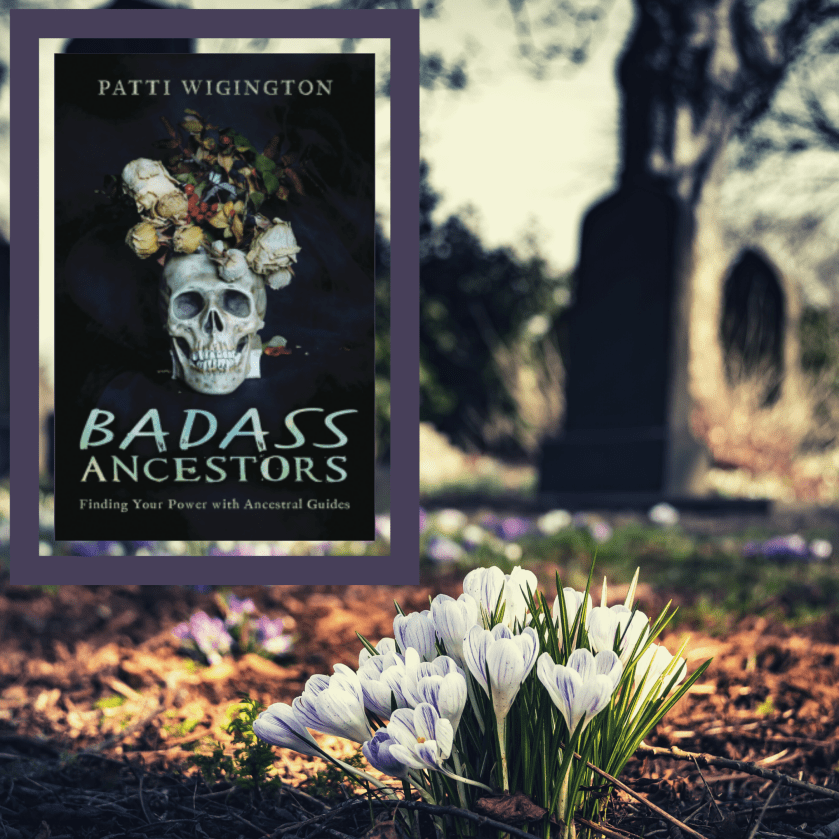
[Witchy Review] “Badass Ancestors” by Patti Wigington

Full Title: Badass Ancestors: Finding Your Power with Ancestral Guides
Author: Patti Wigington
Published: September 2020 by Llewellyn Publications
Genres: Nonfiction, Witchcraft, Magic Studies, Angels & Spirit Guides, Spirituality
Edition Details: 256 pages, trade paperback
Source: ARC – requested by me
Rating: {5/5 stars}

First Glance

I know you don’t usually judge a book by its cover, but a good cover design can get your attention long enough to have you reading the description. That happened here, where the cover art drew me in and then the details had me requesting an advanced readers’ copy on NetGalley.

I don’t work with ancestors in my current practice. My family is a far-flung mess of people, with my biological father’s side completely unknown to me. I’ve always wondered where you would begin to work with ancestors in that kind of situation.

Positive Bits

To be honest, I only made it to the end of Chapter 3 before pre-ordering a physical copy of this book. In the introduction, the author already drew me in with a discussion of chosen family, adopted family, and purposefully severed family ties. She then followed through with that promise from the start, covering different definitions of family and ancestors than just blood relatives.

This book provides both research guidance and ancestor rituals with equal balance between spiritual and mundane methods. I found myself browsing some of the suggested resources just to see what I could find, losing a few hours just poking around online. Thanks to prior family tree work, I know there’s one branch of Filipino heritage I can trace back to ship records, but the author provided suggestions that led to a local ancestor’s grave and a marriage to an actress in the 1930s. Neither of those details came up in previous searches, because I didn’t know where to start.

Meanwhile, the rituals are very approachable and intuitive. Her suggestions for tying in culturally relevant foods resonated with me the most, as I’m a foodie at heart and love trying unfamiliar recipes. The idea of integrating that love into something I can share with my ancestors to show them appreciation just made sense. Again, I found myself down a research rabbit hole as I looked into traditional Filipino recipes and clothing (prior to colonization), but I enjoyed every minute of it.

Less Enjoyable Bits

As with most books, there were parts that didn’t speak to me. As a polytheist, I couldn’t connect to Chapter 8 as the author discussed calling archetypes in place of unknown ancestors. The idea hadn’t sounded strange when it was mentioned prior to that chapter, but then she used deities as if they were archetypes throughout this section. That may work for a non-religious witch or someone who believes deities are archetypes of the Unnamed Divine. However, as a person who’s worked to develop relationships with individual deities along my path, I can’t connect to the idea of treating them like ancestors or symbols instead of actual gods.

I’ll admit that I felt a little lost and left out at times, though it’s not the author’s fault. My family is a tangle web of marriages and divorces, immigrants, lost records, and poor folks. I don’t have family heirlooms or anything older than my grandparents’ generation. We have almost no pictures older than that, either. And don’t get me started on how being poor means not putting down roots! All of that is to say, sometimes the author’s descriptions of how her research progressed (talking to elder living relatives, asking about family heirlooms or where traditions started, looking up local newspapers) felt unfamiliar and almost impossible.

Efforts were made to pull in options for those without steady family trees. They were imperfect, but I appreciate the attempt. By the end of the book, I could tell I’m still out of luck on some fronts when it comes to ancestor tracing and the related spiritual workings. Thankfully, there were plenty of other parts that spoke to me and gave me guidance for working with the ancestors I can reach.

Tidbits Worth Repeating

Our ancestors were survivors of things far more frightening than our first-world problems. They were strong. How do we know that? Because you’re here. Your bloodline survived millennia of plague, war, pestilence, famine, infant mortality, and just plain old bad luck… just to make you. That means your ancestors were badasses. – in the Introduction

It’s not that a rebel is unaware of those constraints; they simply don’t allow themselves to be held by them. The rebel brings about freedom by way of dissent and justice by way of rebellion. – in Chapter 8, Connecting to Archetypical Badasses

Family traditions tend to have other benefits as well. In our hectic and chaotic, non-stop busy lives, a ritualized tradition offers a feeling of comfort. They give us a constant. – in Chapter 11, Your Badass Legacy

Is it worth the coin?

Yes – because I had a free digital ARC and still pre-ordered the physical book. This is the best introduction to ancestor work in a spiritual context that I’ve come across, and there’s value for both the traditional family person and someone like myself with a less structured family tree.

Posted in [witchy reviews]

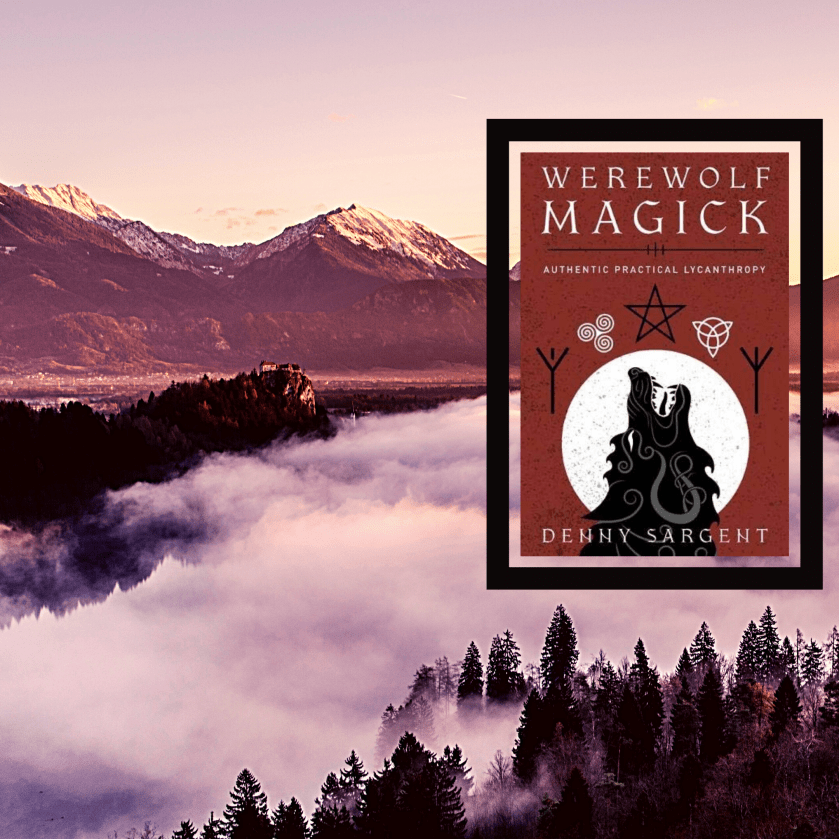
[Witchy Review] “Werewolf Magick” by Denny Sargent

Full Title: Werewolf Magick: Authentic Practical Lycanthropy
Author: Denny Sargent
Published: September 2020 by Llewellyn Publications
Genres: Nonfiction, Magic Studies, Witchcraft
Edition Details: 240 pages, trade paperback
Source: ARC – Requested by me
Rating: {2.5/5 stars}

First Glance

As a therian and animist, I enjoy any opportunity to delve into magic related to shapeshifting and spirit work. This book clearly focused on wolves, which happen to be one of my favorite animals, so I decided to ask for a first look. I received an advanced readers’ copy (ebook) through NetGalley. As usual, I get paid nothing to give my honest opinion.

Positive Bits

The overall idea behind werewolf magick is that we need to (and can) embrace our wild side and go a little feral if we want to really connect to our own power. I’ve written and participated in several different versions of this kind of magic, where you reach deep down to find your inner wildness; it’s a powerful piece of energy work.

The author clearly runs with this wildness, as the majority of the rituals included are wordless. Howls and yips and growls are the only magical words used, and I think that’s a smart approach. It makes it a little harder to plan your ritual, as there are no cue cards, but sound is a good carrier of energy regardless of its form.

I appreciated the notes on animal parts and meat usage throughout the book. As someone who prefers to be an ethical omnivore rather than a vegetarian, I respect the balancing act it takes to honor the animals who obviously had to die in order for you to eat or wear them. There are different ways to approach animal parts (fur, bones, or meat) and they all start with an acknowledgement of death and your role in the process.

Less Enjoyable Bits

I’ll admit that this book is too eclectic for me. There are repeated notices that the author makes no claim at being a shaman, which is all well and good. But then there are random pieces of the Greco-Roman pantheon, modernized versions of old Nordic ritual, and a surprise visit from an Egyptian god. Throughout that mix, we have Gaia used as a name for the Earth as a being (but not as Gaia, the Greco-Roman goddess) and a liberal smattering of mantras from Hindu practices (without any explanation about their source or purpose). The author could’ve used a bit more explanation between rituals to tie together his eclectic pieces, but they were presented as disjointed mosaic pieces.

In the history of werewolves presented, the author travels a familiar and well-worn path of pretending that witches (and, therefore, werewolves) have always existed and were hunted down during the Burning Times. And yet, enough witches and werewolves hid to bring their practices to us today. The truth is, we’ve recognized as a community that the “history” we were taught was a tool to loan authenticity to new practices. After all, everyone respects an ancient teaching, right? Each example of werewolves in the past is dubiously tied together in a string, and it’s supposed to guide us from ancient werewolves to today’s shifters in an unbroken line… that I’m not buying.

Based on personal studies and experience, I found his entire section on Fetches to be misguided. Take it or leave it as you will, but I find that a Fetch or similar thoughtform isn’t an alter ego (wolf or otherwise) of myself. Rather, it’s a separate and directed entity. The author treats the animalself (his word for your animal side) as both a part of you and something apart from you, depending on the working presented. I feel there’s no ambiguity in what is Self versus what is outside of Self, and this makes the entire use of animalself as a Fetch an impractical process – one that I would expect to cause you some discomfort, if not exhaustion. There’s a reason we practice magic with the help of external energies and items other than ourselves.

Tidbits Worth Repeating

The names are less important than the truth behind the powers.

We are smart, feral, amazing beasts who can dress in a suit for work and later that night run naked and howling in the woods under the moon.

Our wild gods are not spiritual metaphors or cosmic entities, they are the dirt beneath our naked paws, the rain that tastes sweet on our tongues, the lunar dance of the tides within us and the fresh scented air of Spring that fills us with green energy.

Is it worth the coin?

No – there are other resources on wolf mythology and shapeshifting that can be found, and I would pick up something more focused if I were studying either topic.

Posted in [fiction reviews]

[Fiction Review] “What Should Be Wild” by Julia Fine

Full Title: What Should Be Wild
Author: Julia Fine
Published: May 2019 by Harper Perennial
Genres: Fiction, Magical Realism, Coming of Age, Fantasy, Adult Fiction
Edition Details: 368 pages, hardcover
Source: Borrowed
Rating: {3.5/5 stars}

This review is spoiler free.

First Glance

My wife’s coworker gave her this book after hearing about some of the other books I’ve read. She said it was my kind of weird. Considering the description includes a family curse and the power to kill at the slightest touch, I figured she was right.

Positive Bits

I happen to enjoy stories that switch perspectives, as long as we’re given clear guidance on who the speaker is for each section. The author did so throughout this book, swapping from the main character Maisie to her female ancestors to build the story. It played an important role in fleshing out the family curse and Maisie’s personal experience of it. Each change in perspective was clearly marked.

Magical realism is that dark kind of lovely to read. It always feels like zooming into a story with magic, whereas we often view it from high above. Instead of showing me how hard it is to live with deadly touch, the author has Maisie weeding the garden by touching certain vines at their base (efficient!). Her actions have a hesitant kind of grace, born of necessity as she dances around touching the living things in her life. I think the real beauty of magical realism is in how successfully it brings magic into our reality, playing it out to its obvious conclusions.

The story of Maisie’s family and the ancestors we meet are tragic and deeply intertwined with Maisie’s own story. Each is fleshed out in a way that builds someone with their own personality and goals, rather than a prop to tell the main character’s story. The other characters in the cast (outside of her family) are equally well told, allowing you to ride along with Maisie while understanding the actions and motives of those around her. Any surprises are based on purposeful plot points, rather than accidental plot holes.

Less Enjoyable Bits

I struggled with what to rate this book, honestly. In my personal rating system, I used 1-10 as options; the 3.5 stars would be 7 in that system, listed as “the book was good, but there were plot holes or tropes that got in the way of full enjoyment – will not keep.” To be fair, “will not keep” just means I have limited shelf space and likely won’t reread this book.

As for the things that got in the way of full enjoyment, there’s not a lot of specifics I can give without ruining the plot. I found that the primary and secondary antagonists we meet just don’t sit well with me. Maisie is made a victim and rests in that place for quite a while, making me frustrated and uncomfortable with her lethargy in the face of being misused. Later, the “climax” kind of fizzles out with the main antagonist not antagonizing Maisie at all once they finally meet. The ending is what I expected it to be, but it was built up to something dramatic only to be solved with a handshake, so to speak.

Because of the ending more than anything else, I don’t know how I’d recommend this book to someone. If asked about this book directly or asked for suggestions on books with magical realism done well, I’d say it’s an interesting read and definitely weird in a good way. But I don’t think this book will be one I choose to suggest to others outside of that window.

Tidbits Worth Repeating

Nothing begs question of permanence, of sin, like the power to kill and revive. Nothing promises revival like a fairy tale.

Tamed. A word for a wild girl made obedient. A word for a hawk with clipped wings, a declawed tiger. A word that made me safe.

Peter would have said that behaviors are determined by principles, theories. That the difference between Theory of God and Theory of Not God was actually quite slim, each a slightly different lens through which to choose to view the world. One a shade lighter, the other negligibly darker – what mattered was that both were held up to the eye and used to filter our experience.

Is it worth the coin?

Yes – if you’re looking for a book with magical realism and a dark family history, this is a good choice.

Posted in [witchy reviews]

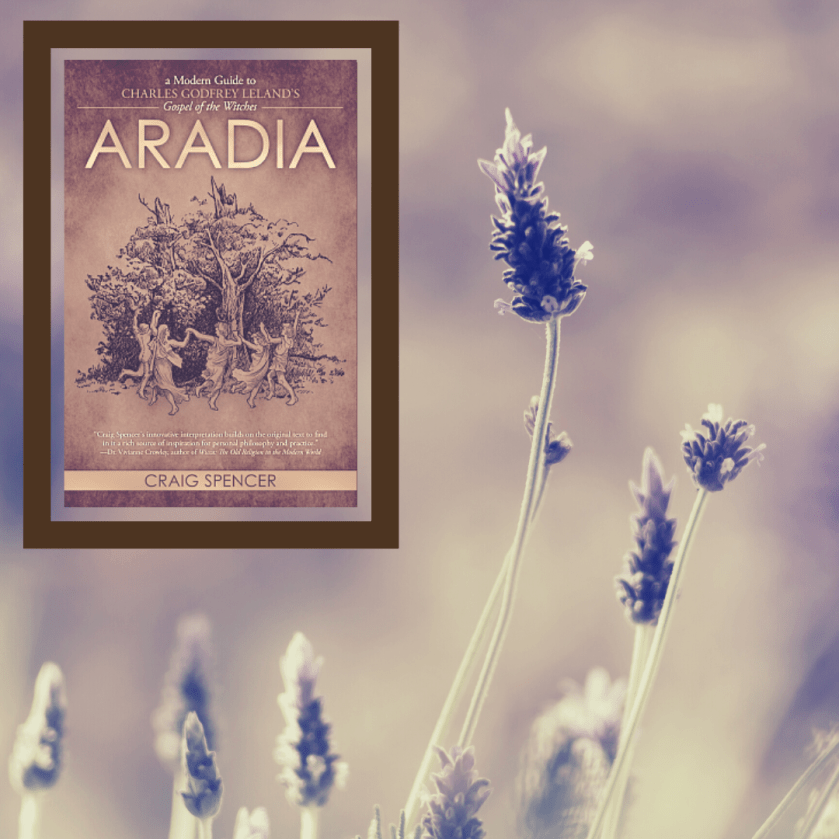
[Witchy Review] “Aradia” by Craig Spencer

Full Title: Aradia: A Modern Guide to Charles Godfrey Leland’s Gospel of the Witches
Author: Craig Spencer
Published: August 2020 by Llewellyn Publications
Genres: Nonfiction, Magic Studies, Witchcraft Religion & Spirituality, Mythology
Edition Details: 240 pages, trade paperback
Source: ARC – Requested by Me
Rating: {4/5 stars}

First Glance

In my early witchy studies, I tried to get my hands on anything written by older sources in an effort to understand the foundation of what witchcraft had become. At that time, I was a Wiccan and read through the writings of Gerald Gardner, Dion Fortune, Doreen Valiente, and other Big Name Pagans.

I tried to read Aradia, Gospel of the Witches multiple times, but I just couldn’t wrap my head around it. From the random inclusion of Lucifer to the rambling stories, I just couldn’t see anything of value for my personal path in Leland’s work, especially as I have no ties to Italy or its traditions.

Thankfully, someone who has those ties has taken the time to retranslate and discuss Leland’s Aradia. I requested a copy of the book when I saw it was available, because I hoped this time someone had made the Gospel make some kind of sense.

Positive Bits

I’ll start off by saying that Spencer made a good decision to write this book. Period. When you realize something is needed and you have the ability to provide it, I think it’s wise to step in and create a resource for others. He did a wonderful job on citing sources and noting where he changed the original translation (as well as why). It’s always a good sign when someone explains their process to you, because you can retrace their steps and see the clear delineation between points A and B.

Pointing out the Catholicism flavoring different portions of the Gospel makes the stories easier to follow. I hadn’t considered it before, but clearly local stories and folktales are colored by the cultures they live inside of; as those cultures change, so do the details of the stories. As I’ve never been Catholic, it was helpful to see the pieces that fit into the Catholic worldview separated and explained throughout the Gospel.

Spencer made sure his Part Two section included enough basic framework to point in the direction that Aradia’s witchcraft would travel without bogging it down in details. In “Attending the Sabbat”, he broke down ritual into individual portions that each tie together to form the great working. I’m always intrigued by new breakdowns of the ritual process, as the differences are often where a ritual’s magical flavor comes in.

Less Enjoyable Bits

I disagree with the premise that witchcraft is inherently a religious act. In the Gospel, I can understand and agree with the idea that the witchcraft of Aradia is meant to be a religion. However, there are so many paths of witchcraft out there that don’t interact with any higher beings, focusing instead on the use of personal and elemental energies to perform spells and rituals. I feel it’s often easy to slip on blinders as a religious witch and fail to recognize this. (As a hard polytheist and animist, I get it.)

Other than that disagreement, I actually found no issue with this book. Spencer set out to provide a better translation and context for Leland’s Aradia, and he did so. Period. I didn’t find his revelations (i.e. interpretations) to be overly invested in a personal agenda or attitude. Instead, he took the time to explain any interpretations he had that didn’t line up with Leland’s original, and he included enough sources to make checking his work possible for those so inclined.

Tidbits Worth Repeating

The moral of this story (and it could also be said of Italian witches) is that we should never attack what we do not understand. We should never attack a divinity just because our own  personal path does not lead in their particular direction. Looking at the world today, this is a lesson that many people could benefit from learning – witches included. (56%)

The spirit of witchcraft is the driving force and power behind the words, not the rigid dogma of a set formula. (92%)

Be the witch you are meant to be, and let the magic of the Old Religion guide you, guard you, keep you, and show you its deep secrets. (98%)

Is it worth the coin?

Yes – I’d recommend this book for anyone interested in historical (traditional) witchcraft, particularly of Italy. It’s a good resource for anyone focused on the “Old Religion” style of witchcraft as a religious path, particularly if you’re drawn to the European and/or Wiccan paths due to their ties to a historical context.

Posted in [witchy reviews]

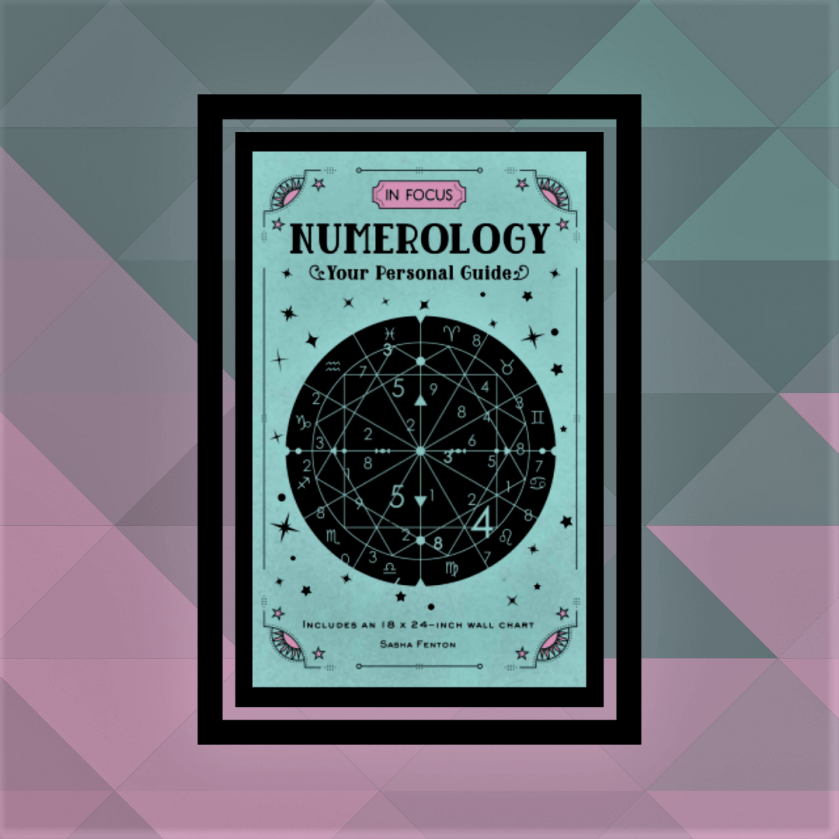
[Witchy Review] “In Focus Numerology” by Sasha Fenton

Full Title: In Focus Numerology: Your Personal Guide
Author: Sasha Fenton
Published: August 2020 by Wellfleet
Genres: Nonfiction, Numerology, Fortune Telling, New Age,
Edition Details: 144 pages, hardcover
Source: ARC – Requested by me
Rating: {4.5/5 stars}

First Glance

I hadn’t heard about this book in particular until I ran across it on NetGalley as an ARC. In my personal experience with books on numerology, I’ve been disappointed by a lack of depth. However, I decided to take a chance and try another volume on the subject.

Positive Bits

Aesthetically, this book is appealing. While not necessarily important to the topic itself, I think it’s always a sign of focus when a book is designed to be pleasing to the eye as well as informative. Think of it as an artistic investment in seeing the book reach more readers.

The author managed to cover far more numerology applications than most books I’ve run across previously. The usual suspects based on your name and date of birth are present, but then she dove into using numerology to check on specific times and dates, as well as your karmic focus for this life and your hidden passion. It even had a section on higher numbers, something I appreciated as some food for thought (particularly in a system that usually condenses all numbers down to single digits). The tidbits of historical references were well integrated, giving my researcher’s brain a place to look if I’m curious about where the basis of each practice evolved.

Another small but important feature is the inclusion of the alphabet-to-number table at the beginning of each chapter. I don’t know how many books require you to write it somewhere, memorize it, or keep a finger on the page that has that information while you move forward to learn about using it. Not having to flip back repeatedly is convenient.

Less Enjoyable Bits

This is more my personal preference than anything else, but I wish there’d been more detail on the history of numerology and the references to historical sources were explained with more depth. I like knowing the where, when, and why behind practices I use today (particularly in an effort to respect source cultures and avoid appropriation). Some of the referenced materials are familiar, like the Hermetica, so I knew more about the topic than the author shared, but overall it felt like crumbs when I wanted a full loaf of bread.

I didn’t do a word count, but it felt like some numbers received less detail in various sections. It wasn’t enough to render their information unhelpful, but it was just noticeable enough to make me wrinkle my nose. However, it might’ve also been a formatting issue, as I’m looking at an ARC. Perhaps the numbers will be formatted into individual pages, in which case an extra (or missing) paragraph will be moot (or at least less obvious).

While the overall style of the book is aesthetically pleasing, I did find some of the clipart out of place. Most of it is in the minimalist line-art style, so there’s a flow to it. But here and there, we get random pencil sketches? In Chapter 9 on The Birth Day Number, for example, there’s a section called “Day Number Crystals” with a sketch of a crystal cluster and then below that a section called “Fruit, Vegetables, Herbs, and Spices” with a sketch of a couple of apples. They aren’t bad sketches, but I flipped back through the book and found zero other sketch-styled art among the minimalist images used in other chapters.

Tidbits Worth Repeating

Sorry! This book is relatively focused on defining numbers based on what aspect of your life you’re trying to divine details from. Other than sharing the numbers that applied to me personally, I don’t think there are necessarily quotes I felt the need to share. I will note that I read all of the numbers rather than just my own, and I found them to each have a balanced amount of positive and negative details included.

Is it worth the coin?

Yes – if you want a starting point in the topic that’s not just the bare minimums, I think this book is a good resource.

Posted in [witchy reviews]

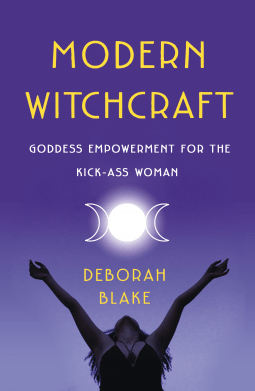
[Witchy Review] “Modern Witchcraft” by Deborah Blake

Full Title: Modern Witchcraft: Goddess Empowerment for the Kick-Ass Woman
Author: Deborah Blake
Published: July 2020 by St. Martin’s Essentials
Genres: Nonfiction, Wicca, Witchcraft Religion & Spirituality
Edition Details: 256 pages, trade paperback
Source: ARC [requested by me]
Rating: {3/5 stars}

First Glance

I was curious about this book, as I haven’t picked up many beginner-focused books lately. I figured it would be a good peek into that side of available witchy literature, and luckily it was available on NetGalley as a reviewable ARC to request. I’m not receiving anything for this review, other than having a digital copy of the book in my possession.

Positive Bits

This book is for those interested in goddess worship and Wicca. I’ll get into that shortly. However, from that perspective, the information it contains is just enough to wet your whistle. The topics all have a minimal amount of details provided, but I believe this works to give an overview of each topic rather than a deep dive that would come with later research.

My favorite section had to be Five-Minute Rituals to Connect with the Feminine Divine. Contrary to the title, the suggestions lean toward small acts of spirituality you can add to your mundane moments in life. I personally love these kinds of lists, because I’m a firm believer that you’re a witch in and out of the circle. Using an evening shower as an opportunity to cleanse both physically and energetically just makes sense, as does the simple act of thanks in the morning. When you first approach Wicca and/or witchcraft, it can feel like everything is loud and big and bright and overwhelming. The Five-Minute Rituals are ideal small steps to bring spirituality into your life without getting bogged down in checking every single box.

The same applies to a section on Practical Suggestions for Creating Positive Change. Blake describes the ways we can use our own focus to build our experience of the world. If you think negatively all of the time, you reinforce the negativity around you. By working to change your inner thoughts to something positive (like affirmations and noticing the positive around you first), you can gain a more positive outlook. This, in turn, pulls more positivity into your life – like attracts like. My favorite affirmation reminded me of the witchy animism I currently practice: “I come from the earth and the stars. I am filled with elemental power.”

Less Enjoyable Bits

This book is for those interested in goddess worship and Wicca. It isn’t for secular witches or polytheists, as it has a hard focus both on the spirituality behind worship and the idea that all goddesses are faces of the same Goddess. Considering the modern witchcraft movement and overwhelming amount of information online, this book is written in a way that would help someone interested in Wiccan-flavored goddess worship and witchcraft as a focus. I don’t think it’s good for a broader audience than that.

That said, I started off my witchcraft journey as a Wiccan and trained in a Wiccan-derived coven, so the content provided fit into my past experience. Actually, this book comes across like those from the early 2000s when I started my studies; the attitudes and beliefs match with the Wiccan witchcraft of that time period.

The resources in this book are dated. Based on my own experience, I’m going to guess that Blake stopped buying/reading introductory books after a certain point as they were no longer necessary. However, that means she references WitchVox (a defunct website that used to be helpful for finding fellow witches nearby) and no books other than her own that were published in this decade (the newest is from 2008). This isn’t necessarily a terrible thing, as Wicca itself has a core of beliefs that haven’t changed since its introduction to the public, but Witchcraft has evolved and changed in so many ways that these aged resources don’t represent the variety and depth of information now available in print.

Tidbits Worth Repeating

When Witches talk about the power of words, it is another facet of the idea that what you put out into the universe is what you get back.

The goddess loves you. Even when other people let you down, the goddess accepts you just the way you are. She doesn’t care that you aren’t perfect. She doesn’t care what color or size or age you are, whether you are gay or straight or bi or asexual. No matter what gender you were born to, if you consider yourself a woman, so does She.

And when I feel powerless or frustrated or angry, I can listen to the rain and the wind and remember that in the smallest element, there can be found the potential for incredible power. After all, a drop of rain seems innocuous until it becomes a flood, and a gentle breeze can change into a tornado that wipes out everything in its path. We may seem as tiny as a single drop of rain, but together, we can move mountains.

Is it worth the coin?

No – There are plenty of well-written books on Wicca, including many focused on specific traditions within Wicca itself. This book is just too broad in its focus to be useful, especially with the lack of current resources for a new witch to look into after reading.

Posted in [witchy reviews]

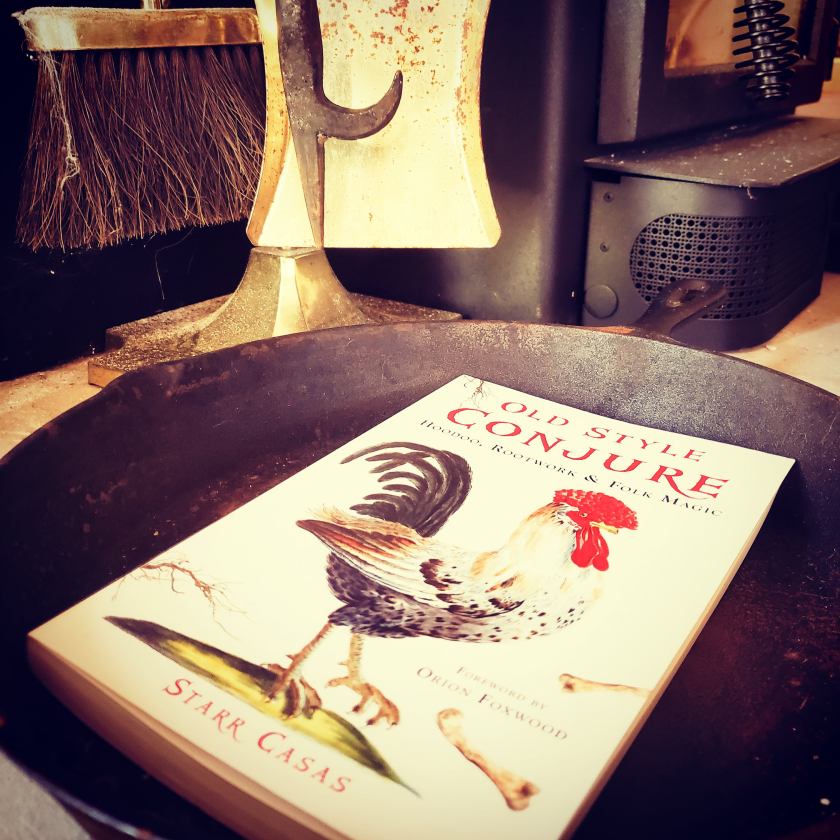
[Witchy Review] “Old Style Conjure” by Starr Casas

Full Title: Old Style Conjure: Hoodoo, Rootwork & Folk Magic
Author: Starr Casas
Published: September 2017 by Weiser Books
Genres: Nonfiction, Magic Studies, Tribal & Ethnic Religious Practices, Occultism, Spirituality, Folklore, Witchcraft
Edition Details: 256 pages, trade paperback
Source: Purchased
Rating: {3/5 stars}

First Glance

As a witch, I’ve researched and explored many different kinds of magic. Somehow I’ve managed not to end up looking into Conjure at all, by no purposeful attempt to avoid it. That said, we visited a local witchy store on my birthday earlier this year, and apparently it was time for me to learn. There was a large display of Conjure books and implements that kept drawing me back, and I knew I had to look into it. I spoke with a gentleman there who works Conjure as part of his personal practices, and he suggested a couple of books to get started. This was one of them.

Positive Bits

One of the allures of Conjure is how practical and natural its works are. Having spent over a decade in the South, I can attest to some of the practices Casas describes as “just what you do”. There are plenty of practices you do because you’re supposed to, without having any real explanation as to why. Folk magic is often passed along in this subtle way, and through “old wives’ tales” or other stories used as instruction.

The works involved in Conjure are largely built to be easily done around others without being noticed. This comes from the roots of Conjure (and its related practices of rootwork and hoodoo), where slaves had to work around those oppressing them without getting caught. With that history in mind, Casas makes an important point about power: “Folks need to remember that anything that has blood shed on it is powerful.” Being simple or easy doesn’t make Conjure any less powerful than bells-and-whistles rituals in witchcraft.

I appreciated the description of crafting your petitions, as it reflects a similar attitude found in other paths I’ve studied (and my own practices). In general, the idea is that simplicity is key, but so is specificity. You get what you ask for, how you ask for it. If you’re not specific about the how, you can’t complain about the methods used to fulfill your requests.

Less Enjoyable Bits

This is not a book I would’ve recommended to anyone new to witchcraft in general or Conjure in particular. With my background knowledge, the various works Casas shares with you make some sense; after all, if you know the magical associations often given to certain herbs, you can make some educated guesses as to the reasons for each item involved in a work. But for the most part, you’re left to follow directions blindly, a thought that makes me cringe and opposes all of the lessons I’ve experienced in using magic.

I didn’t grow up going to church. My dad’s an atheist, and my mom’s an agnostic. I have no innate familiarity (or comfort) with Christianity as a religion, and my main experiences with Christianity haven’t been positive (witch + LGBTQ + woman = trouble in the South). Perhaps others may speak differently, but Casas made it abundantly clear that the constant Christianity within Conjure is required. While changes can be made to works in order to fit modern issues and legalities, changes to the use of biblical verses are sacrilege.

While I respect the reason why Christianity was used in Conjure’s origination (i.e. slavery and adaptation), I don’t understand the insistence that the folk magic aspects cannot be used without the Bible and still be Conjure, yet Conjure isn’t a religion and doesn’t require you to be a Christian. Why couldn’t someone worship the ancestors in a non-Christian format and use Conjure works without the Bible? Wouldn’t that still honor the history of the works? Why is it okay not to follow through on one part of a work (throwing a war water jar at someone’s door) but not another (praying to God for your petition instead of, say, Zeus)? I will always struggle with anything that fails to explain the why.

Tidbits Worth Repeating

What is an altar? The altar is nothing more than a home for Spirit to sit. It’s the place between places where this world meets the spirit world. – page 35

An offering can be as simple or as elaborate as you want it to be. An offering can be a stone you found somewhere and felt drawn to bring home, or maybe a bird’s nest that had fallen out of a tree, or just a simple glass of cool water. – page 41

Words are power, and Spirit listens to our prayers and petitions. – page 181

Is it worth the coin?

No – unless you’re a Christian, in which case this book might be a bridge toward using magic in a context that is comfortable and compatible with your personal path. Without that base knowledge and worship, I’m not sure how to connect to the magics offered in this book.